
Selling a Flood-Damaged St. Augustine House — Hurricane Matthew, Irma, and the Disclosure Reality
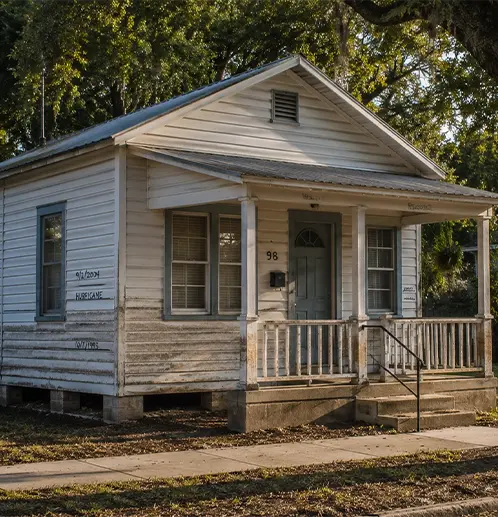
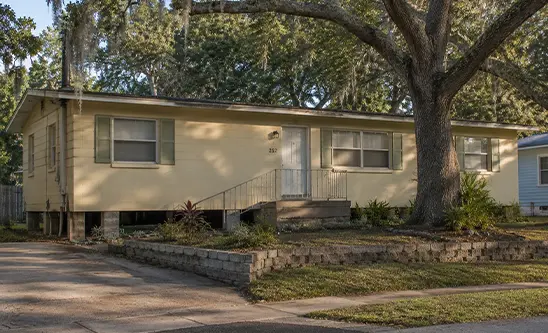
Hurricane Matthew put 32 inches of water in your Lincolnville living room. Hurricane Irma flooded the same property a year later. A 2020 tidal event damaged the kitchen again. Your private insurer non-renewed. Citizens is now $5,800 a year, and the flood-mandate phase-in adds $2,400 more by January 2027. Your traditional listing sat 174 days before you pulled it.
If you own a flood-damaged or flood-disclosed St. Augustine property — whether the damage came from Hurricane Matthew in October 2016, Hurricane Irma in September 2017, subsequent storms (Dorian, Ian, Milton, or smaller events), or recurring nuisance tidal flooding — this guide is for you. It walks through Florida's disclosure framework under F.S. § 689.25 and Johnson v. Davis (1985) as applied to documented flood history. It explains why 90% of St. Augustine residents live in a floodplain per City of St. Augustine documentation, what that means for traditional listings, and how the Citizens Property Insurance flood-mandate phase-in is restructuring the city's insurance economics through January 1, 2027.
And it explains why Jax Home Buyers — a Jacksonville-based, BBB-accredited, 10-year operator 40 minutes north via I-95 — purchases flood-disclosed St. Augustine properties at every claim-history level while most other cash buyers will not.
Get Your Free Cash Offer Now!
Fill out this form to get your no-obligation all cash offer started!
Get Your Free Offer TODAY! old
Fill In This Form To Get Your No-Obligation All Cash Offer Started!
Why St. Augustine Floods — The Documented Reality
The City of St. Augustine's own flood-hazard documentation states: "Flooding is one of the most common risks to Florida residents living in floodplains, and in St. Augustine, 90% of residents live in a floodplain. As the Oldest City in the United States, St. Augustine has aging and undersized infrastructure. St. Augustine is prone to flooding from normal rainfall coinciding with peak tides, tidal surges accompanying coastal storms, tropical storms and hurricanes, as well as overbank flooding from rivers, creeks and tributaries."
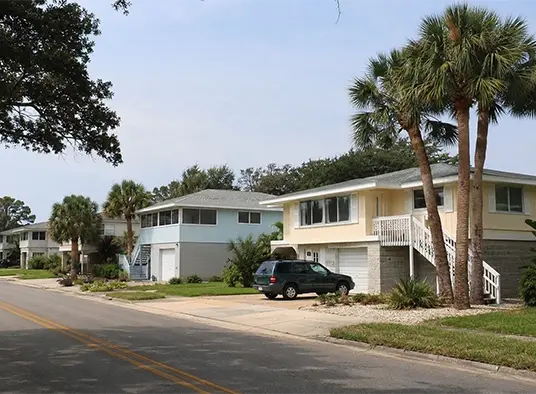
The geography is unforgiving. St. Augustine sits at the mouth of the Matanzas River with the Atlantic Ocean to the east (separated by the barrier island Anastasia), the Tolomato River and San Sebastian River draining inland watersheds, and Lake Maria Sanchez in the heart of Lincolnville. Elevations across most of the city run 0-15 feet above sea level. When peak high tides coincide with rainfall — or worse, with hurricane storm surge — water has nowhere to go. The $6.7 million seawall completed in 2014 reduced waterfront overtopping but did not eliminate flooding from infiltration, stormwater backup, and the simple physics of low-elevation coastal terrain.
Hurricane Matthew in October 2016 was the defining recent event. University of Florida historic preservation experts assessed that water flooded all seven of St. Augustine's federally designated historic districts and damaged approximately half of the 2,000 properties in those areas. Mayor Nancy Shaver described "battleship-gray floodwaters" coursing through the streets of the 451-year-old city. George Street, the center of downtown St. Augustine, was down 70 to 80 percent on flood-recovery assessment metrics. Hurricane Irma in September 2017 flooded the same neighborhoods less than a year later. The City of St. Augustine names Davis Shores, Lincolnville, the Historic Districts, and parts of Abbott Tract as the most affected areas in both storms.
F.S. § 689.25 and the Florida Disclosure Reality
Florida Statute § 689.25 and the Florida Supreme Court's 1985 decision in Johnson v. Davis together establish the modern Florida material-defect disclosure framework. Sellers of residential property must disclose known material defects affecting the property. While F.S. § 689.25 specifically addresses certain narrow disclosure obligations (such as radon gas, lead-based paint, and stigmatized property), the broader Johnson v. Davis doctrine requires disclosure of any material fact not readily observable to a buyer that affects the value of the property.
For St. Augustine properties with documented flood history, this means the seller must disclose: prior insurance claims for flood damage, FEMA disaster assistance received, NFIP flood insurance claims, the property's FEMA-designated flood zone (Special Flood Hazard Area or otherwise), elevation certificate findings, and known prior flood events (whether or not insurance claims were filed). The disclosure obligation is meaningful — buyers who later discover undisclosed flood history can sue for rescission of the sale plus damages.
The practical effect on traditional listings: once flood disclosure appears in the listing documents, the buyer pool compresses approximately 30-50% versus comparable non-flood-disclosed properties. Mortgage lenders apply more conservative underwriting on flood-zone properties. Insurance underwriters require flood policies (and increasingly under Citizens' flood mandate, must require them). Some lenders refuse to lend at all on Special Flood Hazard Area properties with documented multi-event claim history. The remaining buyer pool — typically cash buyers, all-cash investors, and a small subset of risk-tolerant traditional buyers — bids substantially below comparable non-flood-disclosed homes. The Persona 1 Lincolnville homeowner's 174-day un-sold listing is the typical outcome on a multi-flood-disclosed property.
The Citizens Property Insurance Flood Mandate Phase-In
Citizens Property Insurance Corporation (the state-backed Florida carrier of last resort) is phasing in a flood-coverage mandate. Homes valued $400,000 or more by January 1, 2026 must carry flood insurance through NFIP or a private flood carrier. All remaining homes must carry flood insurance by January 1, 2027. The mandate applies even to homes not in FEMA-designated Special Flood Hazard Areas — once a home falls within the value bracket, the rule applies.
The mandate has restructured St. Augustine homeowner economics. For Citizens-insured St. Augustine homeowners — and Citizens is the dominant carrier in St. Augustine because private carriers have aggressively reduced exposure since Hurricane Matthew — the addition of mandatory flood coverage has added approximately $1,800-$3,000+ annually to insurance costs depending on flood-zone designation, elevation, and prior claim history. Combined with the homeowner's premium escalation that drove sellers to Citizens in the first place, total annual insurance costs on St. Augustine flood-zone properties now routinely exceed $7,000-$10,000+.
The structural consequence is a quietly accelerating sell-side pressure across St. Augustine. Homeowners on fixed retirement incomes (a meaningful portion of the St. Augustine population given the city's appeal as a retirement destination) cannot absorb the escalation indefinitely. The traditional-listing path is compressed by the same flood-disclosure dynamic that the insurance crisis is amplifying. Cash sales become the realistic exit path.
How Jax Buys Flood-Affected St. Augustine Properties
Jax's flood-property purchase approach is built around three operating principles.
- Principle 1 — Honest as-is valuation including flood history. Jax's offer reflects the property's documented condition as it actually is — including flood claim history, current condition of any prior remediation work, elevation certificate findings, and FEMA flood-zone designation. We do not penalize the offer for the existence of flood history beyond what the property's actual market value warrants. We do not require sellers to undertake additional repairs, remediation, or insurance documentation before sale.
- Principle 2 — Direct buyer with full closing capability. Jax closes with our own funds. We are not wholesalers searching for an end-buyer to assign the contract to (a model that frequently fails on flood-disclosed properties because the assignee discovers the flood history during their own diligence and walks). We close the transaction ourselves. The number on the written offer is the number that funds at closing.
- Principle 3 — Flexible closing including post-sale stay. For St. Augustine homeowners coordinating an out-of-state relocation, an inland-Florida move, or a transition to a smaller property, the option to stay in the home after closing is meaningful. Jax accommodates these timelines as part of the deal structure.
Frequently Asked Questions

Get a Written Offer on Your Flood-Affected St. Augustine Property This Week
Whether the property took water during Hurricane Matthew, Hurricane Irma, both, or none-but-sits-in-a-FEMA-flood-zone, whether the Citizens flood mandate has restructured your insurance economics, whether the F.S. § 689.25 disclosure obligation made your traditional listing impractical — a written cash offer this week converts the uncertain situation into a definite dollar amount in your account. Jax buys flood-affected St. Augustine properties at every claim-history level. Close in 7-14 days. Local Jacksonville operator. BBB accredited. 10 years. 100+ closed deals.
Get Your Free Offer TODAY! old
Fill In This Form To Get Your No-Obligation All Cash Offer Started!